



























Unlocking Growth: How SMEs Are Leveraging AI for a Real Competitive Edge

" "
Artificial intelligence is no longer the exclusive playground of tech giants and global conglomerates. In recent weeks, a surge of news and case studies has showcased how small and medium enterprises (SMEs) are moving from curiosity to confident adopters—deploying AI not as a buzzword, but as a genuine lever for growth, resilience, and smarter decision-making.
What’s emerging isn’t just a story of technology adoption; it’s about resourcefulness, creative problem-solving, and the unique agility that defines successful SMEs. While headlines often spotlight dramatic AI advances in Fortune 500 boardrooms, the unsung transformation is happening on main streets, in manufacturing shops, and across digital storefronts—where business owners are deploying practical AI solutions to outmaneuver larger competitors.
Finding the Right Fit
For many small business leaders, the first step with AI isn’t about implementing the flashiest technology. It’s about identifying pain points that are ripe for improvement—whether those lie in customer service, supply chain management, or internal operations.
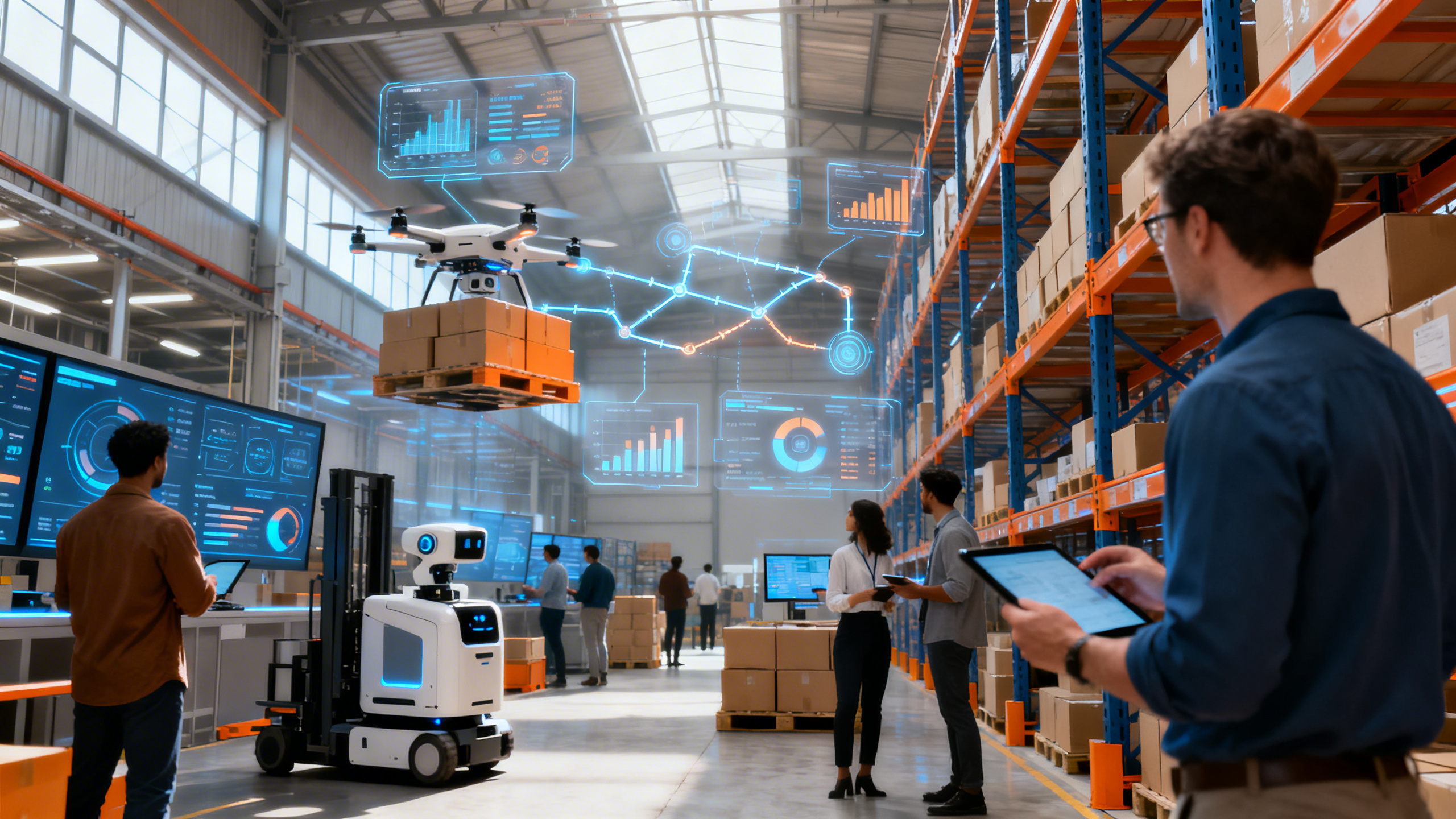
Recent examples abound. A regional logistics company, once swamped by manual dispatching and constant route changes, integrated an AI-powered optimization engine from a cloud provider. The result: dynamic routes, reduced fuel costs, and happier drivers. The solution didn’t require an in-house data science team; instead, the business worked with a local tech consultancy to tailor off-the-shelf AI tools to their existing systems.
Key strategies SMEs are using to identify their AI starting points:
- Listening to frontline employees who spot inefficiencies or bottlenecks daily
- Analyzing repetitive tasks that drain time and morale
- Benchmarking against larger peers to spot gaps where AI could help level the playing field
Smarter Customer Experiences
Customer expectations have changed. Shoppers want quick answers, personalized recommendations, and seamless interactions—whether they’re buying artisanal cheese or booking home repairs. That’s where AI is quietly transforming the SME sector.
Boutique retailers are integrating AI chatbots to handle after-hours questions, recommend products, and even nudge abandoned carts back toward a sale. One family-run electronics shop, for example, recently deployed a multilingual chatbot that can answer technical questions, check inventory, and suggest accessories. This freed up staff, improved customer reviews, and boosted sales conversion rates.
Another approach gaining traction: recommendation engines tailored for smaller product catalogs. By analyzing purchase history and browsing patterns, these lightweight AI systems nudge customers toward items they’re likely to love—without the complexity or cost of enterprise-scale solutions.
Streamlining Operations on a Budget
Operational efficiency isn’t just about cutting costs—it’s about creating space for growth. AI-powered automation is helping SMEs do more with less, from invoice processing to predictive inventory management.
Take the example of a small wholesaler that adopted an AI-driven inventory tracking tool. Using simple integrations with existing point-of-sale and supplier platforms, the business now receives real-time alerts for low-stock items, predicts demand based on seasonal trends, and avoids costly overstocking. This shift allowed the owner to focus less on spreadsheets and more on cultivating supplier relationships—an advantage that’s hard to quantify but easy to appreciate.
Some practical ways SMEs are automating with AI:
- Automated invoice and receipt scanning to reduce manual data entry errors
- AI-driven scheduling that optimizes employee shifts based on sales forecasts
- Predictive maintenance alerts for equipment, minimizing unexpected downtime
Overcoming Barriers: Skills, Trust, and Cost
Adopting AI isn’t without its challenges. Concerns about upfront investment, staff training, and data privacy top the list for many SMEs. Yet, recent developments are lowering these barriers.
User-friendly AI platforms have arrived, featuring drag-and-drop interfaces and guided setup wizards. One bakery, hesitant about technical complexity, was able to deploy an AI-powered marketing tool that suggested social media content based on trending flavors and customer reviews—no coding required.
Trust in AI remains a nuanced issue. Owners worry about “black box” algorithms making the wrong call, especially in customer-facing situations. To address this, some SMEs are choosing transparent AI systems that allow for human override or provide clear explanations for recommendations.
Cloud-based AI is also democratizing access. Subscription models and pay-as-you-go pricing mean that even businesses with tight budgets can experiment without a major capital outlay.
Building an AI-Ready Culture
Technology alone doesn’t drive competitive advantage; people do. The SMEs achieving the biggest returns from AI are those embracing a culture of experimentation, learning, and incremental improvement.
Owners are encouraging staff to view AI not as a threat, but as a co-pilot—an assistant that takes over the repetitive and lets humans focus on the creative, the relational, and the strategic. At a regional print shop, for instance, employees were initially skeptical about an AI-based production scheduler. But after seeing fewer late orders and less overtime, morale improved, and team members began suggesting further uses for automation.
This shift isn’t just about efficiency; it’s about empowering employees to grow into new roles and to see technology as a career ally rather than a replacement.
The Power of Partnerships
Very few SMEs have the resources to develop custom AI solutions from scratch. The most successful are forging partnerships—with local tech consultancies, cloud providers, or even universities.
A manufacturer of eco-friendly packaging recently teamed up with a nearby data science program. Students helped analyze production data, applying machine learning to reduce waste by optimizing cutting patterns. The partnership delivered real savings, while giving the company access to expertise it couldn’t have hired directly.
Cloud marketplaces are also expanding, offering plug-and-play AI tools for functions like fraud detection, demand forecasting, and customer support. By choosing wisely—prioritizing solutions that integrate with existing workflows—SMEs can avoid vendor lock-in and ensure flexibility as they grow.
Turning Insights into Action
Implementing AI isn’t a one-and-done project. It’s an ongoing process of tuning, learning, and adapting. The SMEs seeing the most impact are those that:
- Start small but aim high, piloting AI in one business unit before scaling up
- Track measurable outcomes, from reduced lead times to higher customer satisfaction scores
- Solicit regular feedback from staff and customers to refine their approach
- Invest in continuous learning, ensuring teams stay updated as new tools emerge
A specialty coffee roaster, for instance, began by using AI to analyze sales trends and optimize roast schedules. Once the system proved its worth, the company expanded its use, deploying AI-driven forecasts to anticipate raw bean needs and even to predict which flavor profiles would trend with local customers.
Emerging Trends to Watch
The pace of AI innovation is accelerating, and SMEs are poised to benefit from several new trends:
- No-code AI development is making customization easier, allowing non-technical staff to build simple predictive models or workflow automations.
- AI-powered cybersecurity tools are now accessible to smaller firms, offering real-time threat detection and response previously only available to larger enterprises.
- Natural language processing is improving customer support, enabling even small teams to deliver instant, personalized responses across multiple channels.
As more SMEs adopt AI, sector-specific solutions are emerging. A growing number of providers are tailoring offerings for industries like retail, logistics, hospitality, and manufacturing—delivering focused value without unnecessary complexity.
Rethinking Competitive Advantage
What’s clear from the latest developments is that AI isn’t just about speed or cost savings. For SMEs, the greatest advantage often lies in agility—the ability to spot opportunities, adapt quickly, and deliver experiences that larger competitors struggle to match.
A neighborhood bookstore, for instance, used AI-driven analytics to identify shifting reading trends and organize community events that drew in new audiences. By combining local insight with data-driven recommendations, the business strengthened its ties with readers and boosted both loyalty and sales.
SMEs moving forward with AI are discovering that:
- Small experiments can yield outsized rewards—from happier customers to unexpected efficiencies.
- Building a culture that embraces change is as important as selecting the right algorithms.
- Collaboration unlocks value—whether through external partnerships or by empowering frontline staff to drive innovation.
The Road Ahead
AI is reshaping the landscape for SMEs, turning once-daunting technologies into practical tools for everyday business challenges. As more business leaders move from curiosity to confident adoption, the gap between tech haves and have-nots is narrowing—not widening.
The strategies that stand out are those that blend technology and teamwork, experimentation and execution. By starting with real problems, focusing on people, and forging the right partnerships, SMEs are not just implementing AI—they’re redefining what it means to compete and thrive in a changing economy.
For every small business owner still on the fence, the message from recent success stories is unmistakable: the most powerful AI advantage belongs to those willing to learn, experiment, and grow. And in this new era, size is no longer a barrier to big ambition.